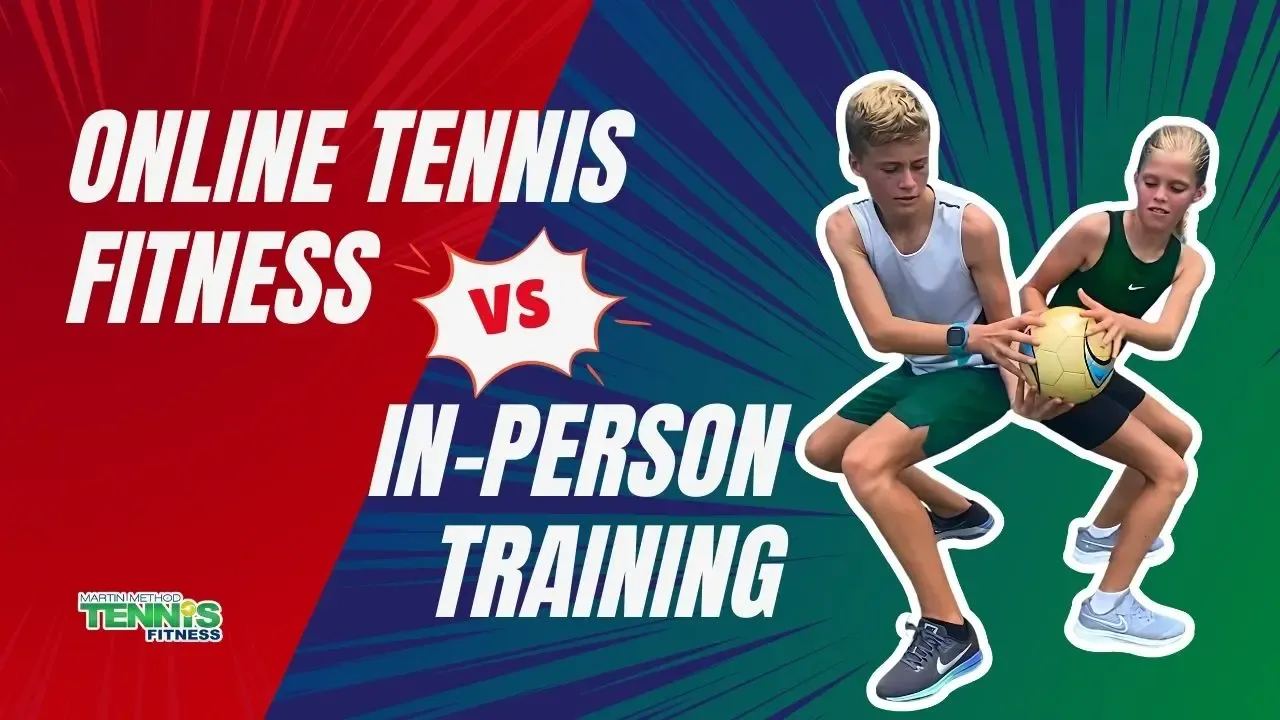
Online Tennis Fitness vs In-Person Training: What Actually Works?
Mar 18, 2026When it comes to improving your tennis fitness, one of the most common questions players and parents ask is:
Should I train with a tennis trainer in person, or follow an online tennis fitness program?
Both options can work. But they are not equal in every situation, and choosing the wrong approach can lead to inconsistent training, wasted time, or unnecessary injuries.
Understanding the strengths and limitations of each can help you make a better long-term decision.
The role of tennis fitness training
Tennis fitness is not just about getting fitter. It is about preparing the body for the specific demands of tennis.
This includes:
- Speed and movement across the court
- Strength for repeated efforts
- Injury resistance in key areas such as shoulders, knees, and hips
- Endurance for long matches and tournaments
- Confidence in physical preparation
How you train these qualities matters just as much as how often you train.
At higher levels, high performance tennis fitness training becomes more specific, demanding, and closely aligned with competition requirements.
In-person tennis fitness training
Working with a tennis trainer face-to-face can be highly effective, particularly when the trainer understands the physical demands of tennis.
Benefits of in-person training
- Immediate feedback on technique and movement
- Personal interaction and motivation
- Ability to adjust exercises in real time
- Strong accountability during sessions
For younger players or those new to structured training, this environment can help build confidence and correct movement patterns early.
Limitations of in-person training
- Limited access based on location and availability
- Higher cost over time
- Sessions are often isolated rather than part of a long-term plan
- Progress can stall between sessions without clear structure
Many players rely on sessions without having a clear weekly training system, which can lead to inconsistency.
Online tennis fitness programs
Structured online tennis fitness programs provide players with a clear plan they can follow independently.
Benefits of online training
- Clear weekly structure and progression
- Flexibility to train anywhere and at any time
- Long-term programming rather than isolated sessions
- Consistent approach across strength, movement, and injury prevention
High-quality online tennis fitness programs are designed as complete systems, not just collections of workouts.
Limitations of online training
- Requires self-discipline and consistency
- No real-time correction unless support is available
- Can be confusing if the program lacks structure
The effectiveness of online training depends heavily on the quality and structure of the program.
When in-person training works best
In-person training is often most beneficial when:
- A player is new to training and needs guidance on basic movement
- There are technical issues that require immediate correction
- A trainer has strong tennis-specific knowledge
- The player thrives on direct interaction and accountability
This is especially relevant for players balancing work, recovery, and court time, where tennis fitness programs for adults and over 40s need to prioritise structure, efficiency, and long-term joint health.
This is particularly important for younger players, where well-structured junior tennis fitness programs help build strong movement and coordination early.
When online training works best
Online tennis fitness programs are particularly effective when:
- A player wants consistent weekly structure
- Access to quality in-person training is limited
- There is a need for long-term progression
- Training needs to fit around school, work, or travel
- The player is motivated and able to follow a plan
For many players, this structure is what drives long-term improvement.
The hybrid approach (often the best option)
In many cases, the most effective solution is a combination of both.
A structured online program provides the plan, while occasional in-person sessions provide feedback and adjustments.
This approach allows players to:
- Train consistently
- Follow a clear progression
- Receive guidance when needed
- Avoid relying on random or unplanned sessions
It combines structure with flexibility.
What actually works long term
The most important factor is not whether training is online or in person. It is whether the training is:
- Structured
- Progressive
- Tennis-specific
- Consistent over time
Players who follow a clear plan and train consistently will always outperform those who rely on occasional sessions or random workouts.
Final thoughts
Both online tennis fitness programs and in-person training can play an important role in a player’s development.
The key is choosing an approach that provides structure, consistency, and long-term progression.
When training supports the demands of tennis and fits into a player’s lifestyle, improvements in movement, performance, and injury resistance follow naturally.