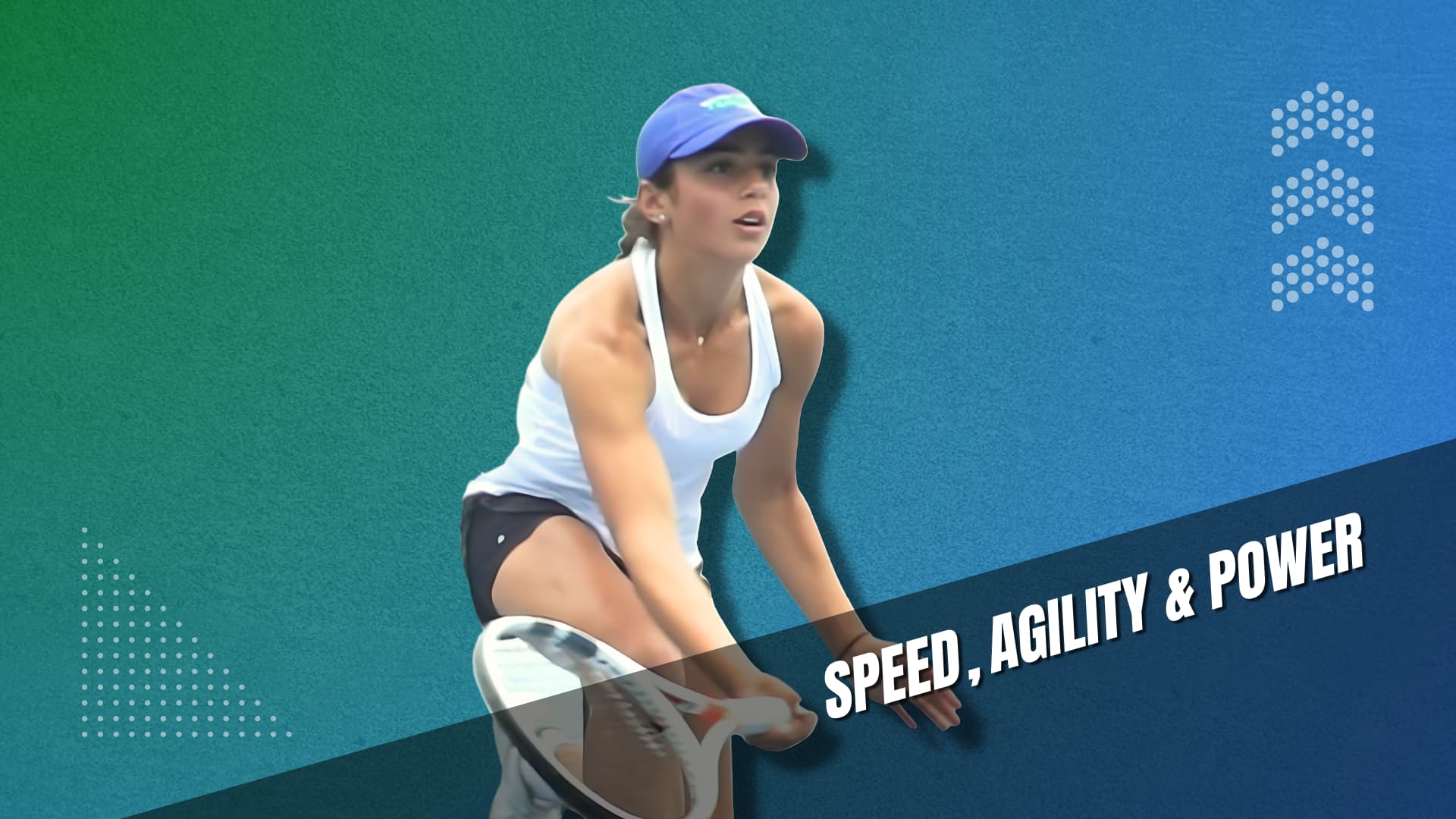
Why Tennis Players Feel Slower on Court (And What to Train Instead)
Jan 01, 2025Have you ever felt like you're getting to the ball a fraction too late?
Maybe you're struggling to reach wide shots, feeling slower recovering after a serve, or finding it harder to change direction during long rallies.
Your first thought might be:
"I need to get faster."
But here's something worth considering.
Feeling slow on a tennis court doesn't always mean your running speed is the problem.
Tennis movement involves several physical qualities working together. And if one of those qualities is limiting you, simply running more sprints may not solve the issue.
Let's look at what actually matters.
1. Tennis Speed Is More Than Running Speed
Think about what happens during a typical tennis point.
You need to recognise where the ball is going, initiate your movement, accelerate into position, control your body as you prepare to hit, and recover for the next shot.
Sometimes you have to do all of that within seconds.
Unlike running in a straight line, tennis constantly challenges your ability to accelerate, decelerate and change direction.
That's why tennis speed training should reflect the demands of the game.
2. Your First Step Matters
You don't always have several metres to build up speed.
Often, your ability to move quickly over the first few steps makes a significant difference to how well you reach the ball.
This involves more than moving your feet quickly.
You need to be able to produce force against the ground, move efficiently in the required direction, and coordinate your movement with the incoming ball.
What to train:
- Short acceleration drills over a few metres
- Controlled lateral push-offs
- Tennis-specific footwork patterns
- Reaction-based movement drills
Start with quality movement before increasing the speed or complexity.
3. You Need to Be Able to Stop, Too
One of the most overlooked parts of tennis movement is deceleration.
You might be able to accelerate quickly, but what happens when you need to slow down and prepare for your shot?
If you struggle to control your momentum, you may find yourself arriving off balance or needing extra steps to recover.
Being able to brake effectively is an important part of changing direction.
What to train:
- Controlled stopping drills
- Lateral movement with a balanced finish
- Single-leg strength and stability
- Progressive change-of-direction drills
Don't focus only on how quickly you move.
Pay attention to how well you control the movement.
4. Strength Supports Your Movement
If you want to improve your tennis movement, strength training deserves a place in your routine.
Your legs and hips contribute to acceleration, braking and changes of direction.
Your trunk helps you maintain control and transfer force through different movements.
And your overall strength provides a foundation for developing more explosive actions.
This doesn't mean every tennis player needs to lift heavy weights.
It means strength training should be appropriate to your ability, training history and tennis goals.
What to train:
- Squat and lunge variations
- Single-leg strength exercises
- Lateral strength movements
- Core stability and control
Build a foundation before progressing to faster or more demanding exercises.
5. Reaction and Decision-Making Matter
Sometimes the issue isn't how quickly your body can move.
It's how quickly you recognise where you need to go.
In tennis, you respond to your opponent's movements, the ball's direction, speed and spin, and your own court position.
That's why movement drills that involve a decision can be useful.
For example, instead of always knowing which direction you're going to move, you can introduce a visual or verbal cue.
This challenges you to react and move, rather than simply repeat a predetermined pattern.
What to train:
- Partner-directed movement drills
- Reaction-based footwork
- Random-direction movement drills
- Tennis-specific movement patterns
6. What Changes for Tennis Players Over 40?
If you're over 40, you may notice that certain movements or longer matches feel more demanding than they used to.
But that doesn't mean you should stop training speed, strength or power.
These qualities can still be developed with appropriate training.
The important thing is to consider your current fitness, recovery capacity, training experience and any physical limitations.
Rather than trying to do more of everything, focus on training consistently and progressing at a level your body can manage.
The goal isn't to train like you're 20 again. It's to prepare your body for the tennis you want to play now.
7. A Simple Approach to Better Tennis Movement
If you're looking to improve your movement, start by considering these five areas:
- Strength: Can you produce and control force effectively?
- Acceleration: Can you move quickly over the first few steps?
- Deceleration: Can you slow down and maintain balance?
- Change of Direction: Can you transition efficiently into your next movement?
- Reaction: Can you respond to the demands of the point?
You don't need to train every quality at maximum intensity in every session.
What matters is developing them progressively as part of a structured training plan.
Final Thoughts: Train for the Movements Tennis Actually Requires
If you're feeling slower on court, don't automatically assume the answer is more running.
Take a closer look at how you move.
Are you reacting late? Struggling with your first step? Losing balance when you stop? Finding it difficult to change direction?
Understanding what's limiting your movement can help you make better decisions about your training.
And when strength, speed, agility and power are developed together, you're taking a more complete approach to tennis fitness.
Ready to Take Your Tennis Movement Further?
Our Tennis Speed, Agility & Power Program brings these physical qualities together in a structured, tennis-specific training plan.
If you're ready to move beyond random drills and train with more purpose, explore the program and find out what's included.
EXPLORE THE TENNIS SPEED, AGILITY & POWER PROGRAM