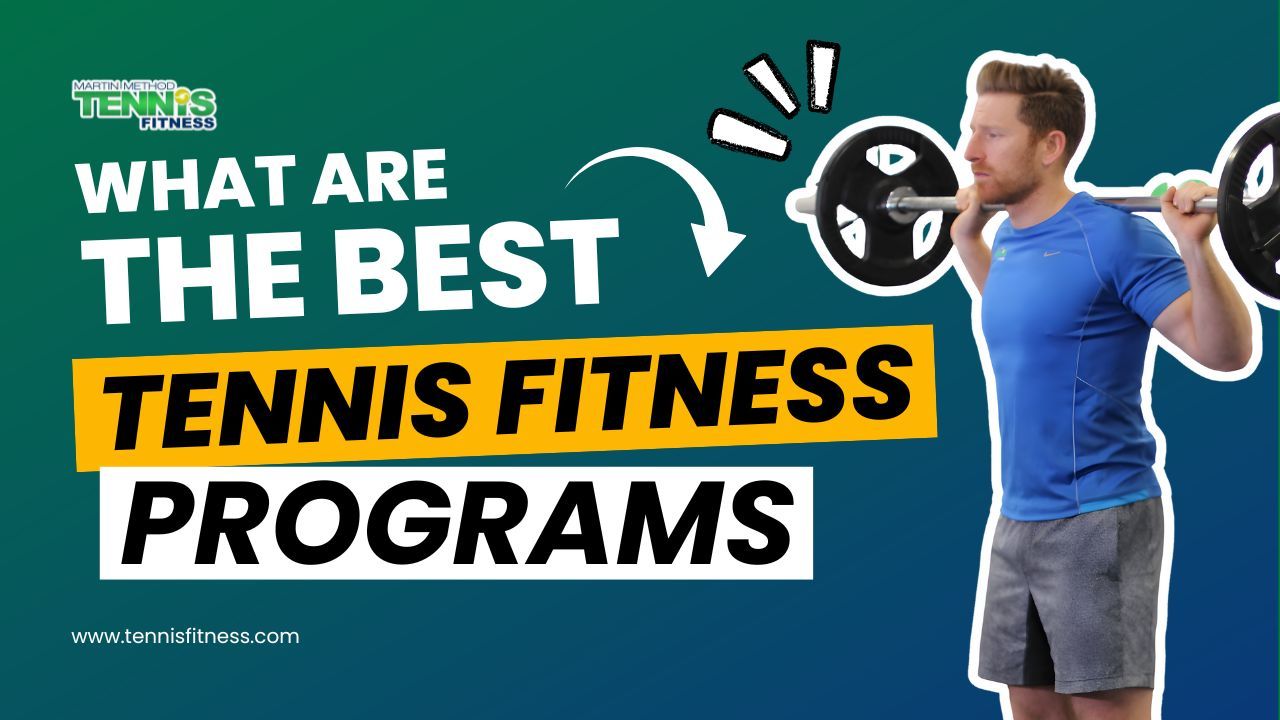
What Are the Best Tennis Fitness Programs? A Coach’s Breakdown
Jan 27, 2026If you search online for tennis fitness programs, you will quickly realise there are a lot of options. From generic gym workouts and YouTube videos to highly structured training systems, it can be difficult to know what actually works for tennis and what does not.
After working in Tennis Fitness for over two decades with junior players, competitive adults, and professional athletes, one thing is clear. Not all tennis fitness programs are created equal, and choosing the wrong type of program can slow progress or increase injury risk.
This article breaks down the different types of tennis fitness programs available, what to look for, and how to choose the right approach for your stage of development.
Why tennis fitness training needs to be specific
Tennis is a unique sport. It requires repeated short bursts of speed, rapid changes of direction, rotational power, strength, balance, and the ability to recover quickly between points and matches.
A good tennis fitness program should improve:
- Movement efficiency and court speed
- Strength and power for repeated efforts
- Injury resistance for shoulders, knees, hips, and lower back
- Endurance for long matches and tournaments
- Confidence in physical preparation
Generic fitness programs often miss these demands. They may build general fitness, but they do not always transfer well to on-court performance or long-term durability.
The main types of tennis fitness programs
Most tennis fitness programs fall into one of the following categories. Understanding these categories helps you identify what you are actually signing up for.
1. Generic gym or fitness programs adapted for tennis
These programs usually come from general fitness backgrounds and are modified slightly for tennis players.
They often include:
- Standard strength exercises
- Cardio conditioning
- Basic core work
While these programs can improve general fitness, they often lack:
- Tennis-specific movement patterns
- Progressive long-term planning
- Injury prevention strategies tailored to tennis
These programs may be useful as a starting point, but they rarely provide the structure needed for sustained improvement.
2. YouTube based tennis workouts
Free tennis workouts on YouTube are popular and accessible.
They can be helpful for:
- Short-term motivation
- Exercise ideas
- Quick sessions when time is limited
The main limitations are:
- No long-term progression
- No individualisation
- No accountability or structure
- High risk of random training
YouTube workouts are best viewed as supplements, not complete tennis fitness programs.
3. In-person strength and conditioning coaching
Working one-on-one with a coach can be very effective, especially when the coach understands tennis.
Benefits include:
- Personalised programming
- Immediate feedback
- Strong accountability
Limitations can include:
- Cost
- Availability
- Inconsistent programming if travel or scheduling changes
- Lack of long-term planning outside sessions
For many players, combining in-person coaching with structured online programming works best. This is particularly important for players following high performance tennis fitness training pathways with higher physical demands.
4. Structured online tennis fitness programs
Structured online tennis fitness programs are becoming increasingly popular, and for good reason.
High-quality online programs provide:
- Clear weekly training structure
- Progressive long-term planning
- Tennis-specific strength, speed, and movement training
- Injury prevention built into the program
- Flexibility to train anywhere
The key difference between strong online programs and weaker ones is structure. The best programs are not collections of random workouts. They are systems that guide players through appropriate training phases based on age, experience, and goals.
What makes a tennis fitness program effective
Regardless of format, the best tennis fitness programs share several key characteristics.
1. Clear structure and progression
Tennis fitness is not about doing more. It is about doing the right things at the right time.
A quality program should:
- Tell you what to do each week
- Progress exercises logically
- Balance training and recovery
- Adjust demands as the player develops
Random training leads to inconsistent results.
2. Tennis-specific movement and strength
Exercises should reflect how tennis players move and generate force.
This includes:
- Lateral and multi-directional movement
- Rotational strength and power
- Single-leg strength and stability
- Deceleration and landing mechanics
These qualities protect the body and improve on-court performance.
3. Injury prevention built into the program
Injury prevention should not be a separate add-on, which is why well-designed tennis injury prevention programs are built directly into the training process.
Effective tennis fitness programs include:
- Shoulder and rotator cuff strength
- Hip and knee stability
- Core control
- Load management
This is especially important for juniors and over 40s players.
4. Appropriate training for age and stage
A junior player does not need the same program as an adult competitor, which is why junior tennis fitness programs should follow a different structure and progression.
Good programs recognise:
- Growth and development stages in juniors
- Time and recovery constraints in adults
- Higher physical demands in advanced players
One-size-fits-all programs rarely work long term.
Choosing the right tennis fitness program for you
The “best” tennis fitness program depends on your current situation rather than a one-size-fits-all answer. When choosing a program, it’s important to look beyond individual workouts and consider how the training fits your needs, goals, and lifestyle.
Before committing to any tennis fitness program, it’s worth asking yourself:
- What is my age and current playing level?
- Am I trying to improve performance, stay injury free, or both?
- How many days per week can I realistically train and recover?
- Do I need a highly structured plan or more flexibility?
- Do I prefer guidance and support, or independent training?
For adult players balancing work, family, recovery, and court time, tennis fitness programs for adults and over 40s should focus on movement efficiency, strength, recovery, and long-term joint health rather than short-term intensity.
Alongside these factors, there are a few practical considerations that often make the difference between a program that works short term and one that delivers long-term results.
1. The experience and credibility behind the program
A quality tennis fitness program should be created by coaches with proven, tennis-specific experience. Coaches who have spent many years working with junior players, competitive adults, and professional athletes are more likely to understand the physical demands of tennis and how to manage training loads safely over time.
2. A clear guarantee or risk-free option
A money-back guarantee shows confidence in the program and allows players or parents to commit without unnecessary risk. This can be especially important when starting a new training approach or investing in a longer-term program.
3. Access to support and guidance
Even well-designed programs raise questions. Being able to contact support and receive timely responses helps players stay consistent, confident, and on track with their training.
For many players, a structured online tennis fitness program that combines clear programming, experience-backed coaching, and reliable support provides the best balance of guidance, flexibility, and progression.
A coach’s perspective on long-term success
The most successful tennis players are not the ones who train the hardest for a few weeks. They are the ones who train consistently for years with a clear plan.
The goal of a good tennis fitness program is not just short-term gains. It is to help players:
- Move better
- Stay on court longer
- Avoid unnecessary injuries
- Build confidence in their preparation
- Enjoy their tennis for longer
When fitness training supports tennis rather than competing with it, performance improves naturally.
Final thoughts
There are many tennis fitness programs available online and in person. The best programs are not defined by flashy exercises or extreme workouts. They are defined by structure, progression, tennis specificity, and long-term thinking.
If a program helps you train with clarity, consistency, and purpose, it is doing its job.
Stop Guessing. Start Training Properly.

Great results come from following a clear system you can trust, not constantly changing what you do.
To celebrate the Australian Open, we’ve put every Tennis Fitness program we’ve created into one complete bundle. One simple purchase, no ongoing payments, and everything your child needs in one place.
If you want confidence that your child is training the right way and building a strong foundation for the future, this is a great opportunity to start the season with clarity and peace of mind.
👉 Explore the Australian Open Bundle
Nathan Martin
Tennis Fitness Expert