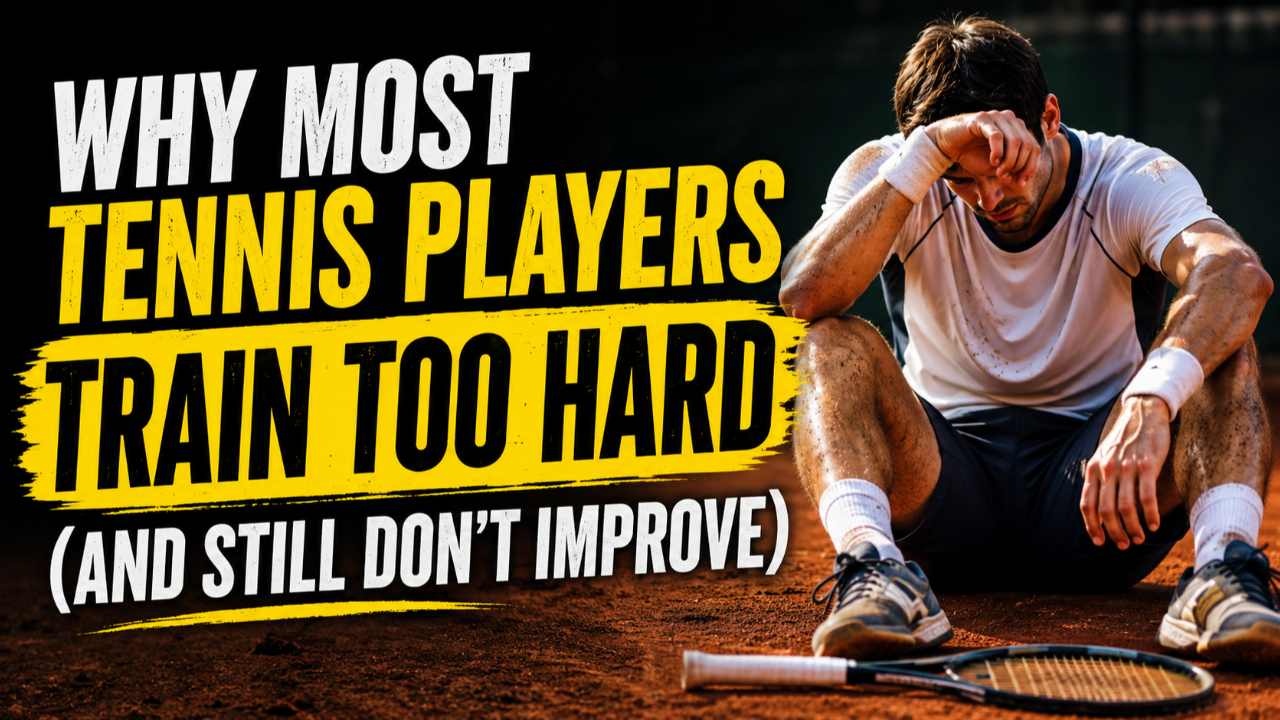
Why Most Tennis Players Train Too Hard (And Still Don’t Improve)
Jul 05, 2026One of the biggest mistakes tennis players make is believing that more training automatically leads to better results.
More sessions.
More running.
More hours on court.
More intensity.
But here’s the problem…
Many players are training harder than ever and still not improving.
In some cases, they actually start going backwards.
Movement feels slower.
The body feels heavy.
Motivation drops.
Injuries start appearing.
Sound familiar?
After working with tennis players for over 20 years, I’ve seen this pattern happen at every level of the game, from juniors all the way through to professional players.
The issue usually isn’t effort.
It’s the lack of structure, recovery, and understanding around how the body actually adapts to training.
More Training Is Not Always Better
Tennis is already a physically demanding sport.
Players are:
- accelerating constantly
- changing direction
- rotating aggressively
- recovering between points
- handling mental stress
- and often competing multiple days in a row
If you keep adding more work without balancing recovery and movement quality, the body eventually struggles to adapt.
That’s when:
- fatigue accumulates
- movement quality drops
- recovery slows down
- concentration fades
- and injuries begin to appear
Many players think they need to push harder through this.
In reality, the smarter move is often improving the quality and structure of their training.
Why Players Plateau
One of the most common things we see is players doing a lot of work but not following any real progression.
They:
- train randomly
- copy drills from social media
- do extra sessions without purpose
- constantly push intensity
- rarely recover properly
This creates a cycle where the body is constantly under stress but never fully adapting.
Without structure, players often stay stuck at the same level physically and mentally.
This is where following structured online tennis fitness programs can make a huge difference because players have clear progression, balanced workload, and purpose behind what they are doing.

Signs You May Be Training Too Hard
A lot of players ignore the warning signs until injury forces them to stop.
Some common signs include:
- heavy legs during matches
- slower movement
- poor recovery between sessions
- low motivation
- recurring niggles
- constant soreness
- reduced concentration
- poor sleep
- increased frustration on court
Many players assume this means they need to get fitter.
Sometimes it actually means the opposite.
The body may simply need better management.
Movement Quality Starts To Break Down
One of the first things that suffers when players are fatigued is movement quality.
Footwork becomes less efficient.
Balance becomes harder to control.
Recovery between shots slows down.
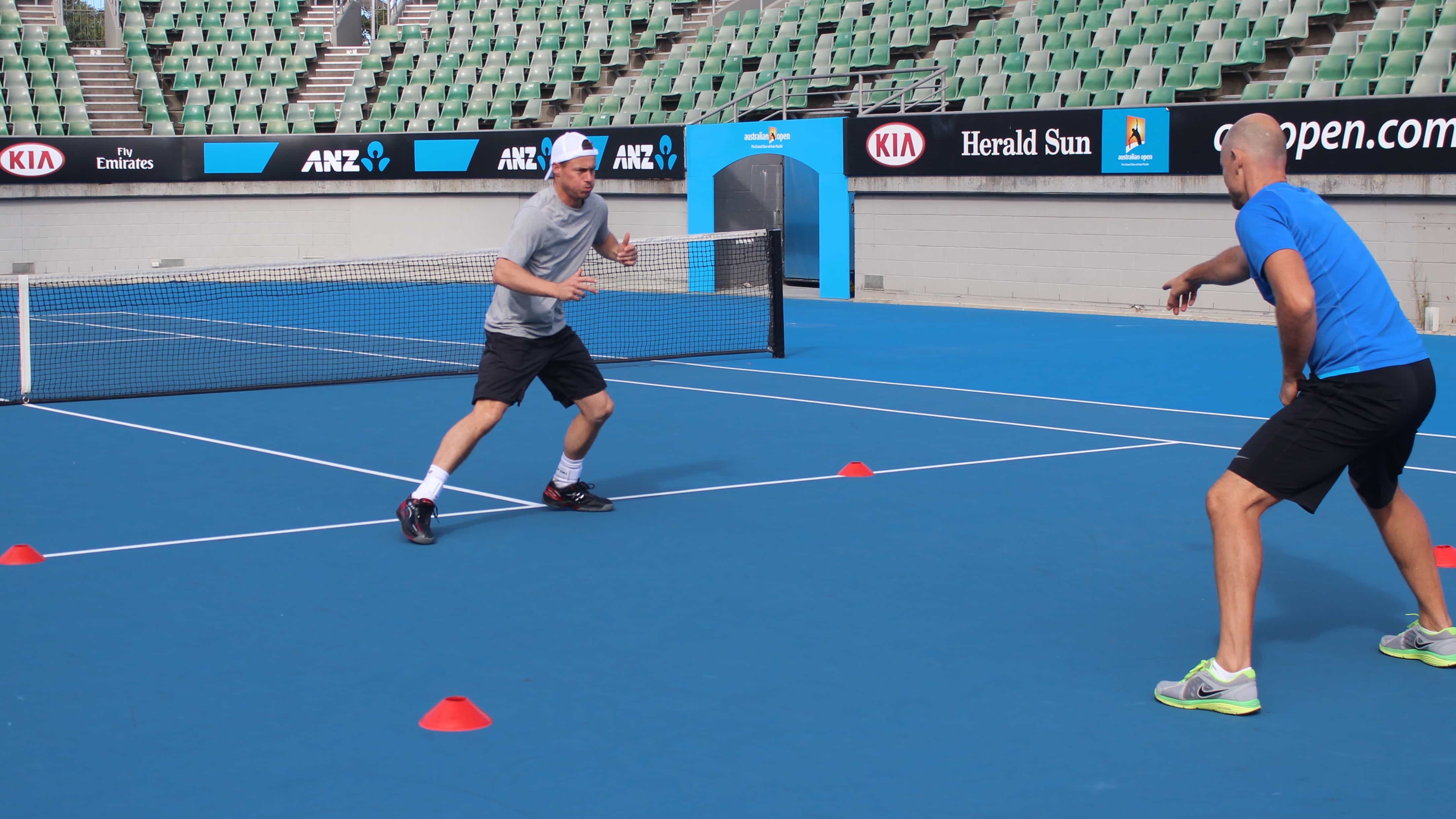
Players who move better on the tennis court usually move more efficiently because their body is prepared properly, not just because they train harder.
This is where mobility, activation, recovery, and movement preparation become critical.
Recovery Is Part of Training
This is one of the hardest things for driven tennis players to accept.
Recovery is not being lazy.
Recovery is part of the adaptation process.
Without recovery:
- the nervous system stays overloaded
- movement efficiency drops
- fatigue accumulates
- injury risk rises
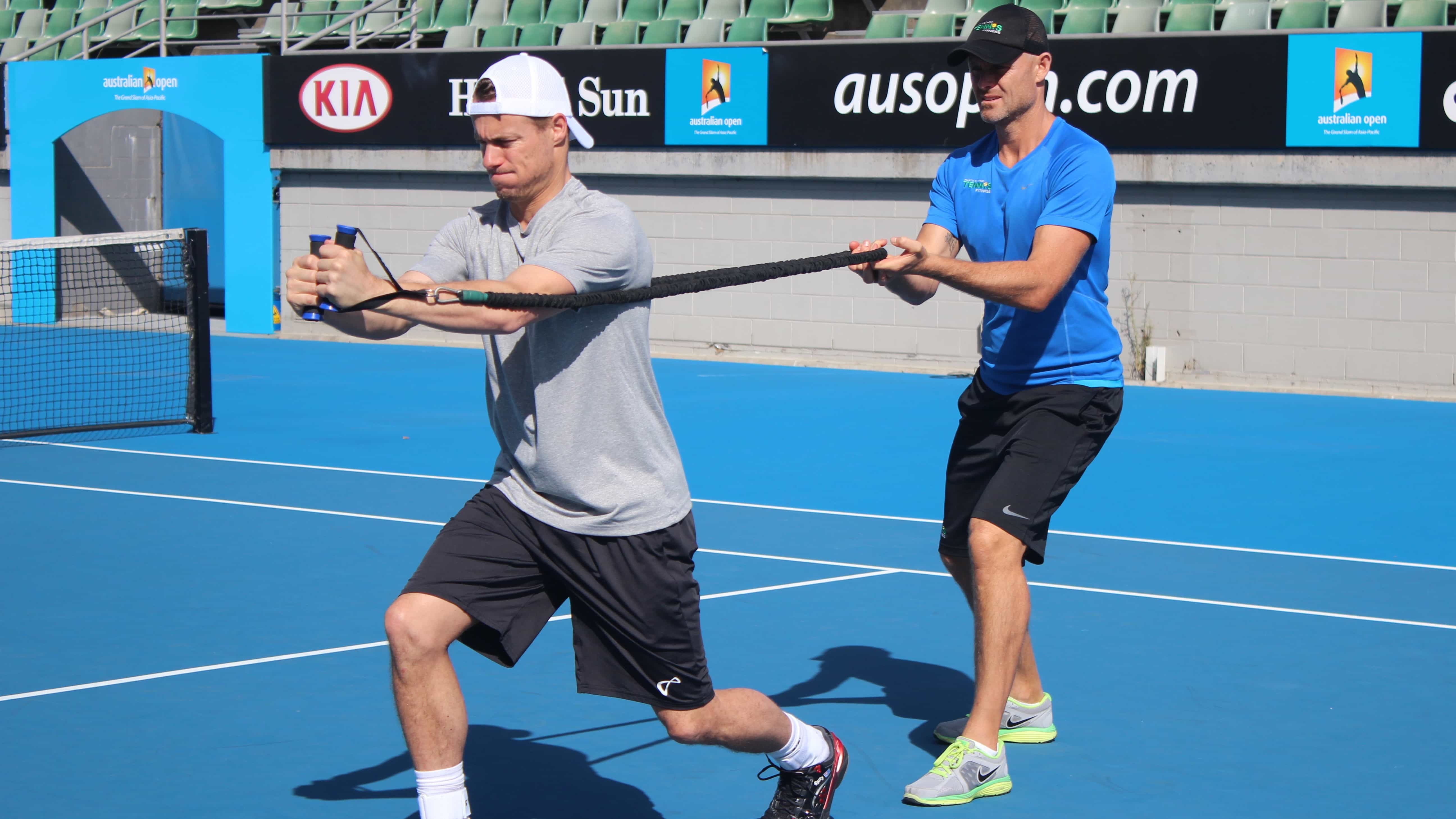
This is why many well-designed tennis injury prevention programs focus just as much on load management and recovery as they do on strength and conditioning.
The players who improve the most long term are often the players who recover the best.
Junior Players Are Especially Vulnerable
This is something parents and coaches need to understand.
Young players often want to do more and more because they are motivated and passionate.
That’s great.
But younger athletes also struggle to read fatigue properly.
This is why junior tennis fitness programs should focus on long-term development, movement quality, gradual progression, and recovery rather than excessive volume.
If younger players spend years constantly overloaded physically, it becomes very difficult to undo later.
Smarter Training Usually Wins
The best players are not always the players doing the most.
They are often the players:
- training with purpose
- recovering properly
- following structure
- progressing gradually
- managing workload intelligently
That’s what creates long-term physical improvement.
Not random hard work.
Final Thoughts
Tennis players absolutely need to work hard.
But there is a big difference between:
- productive training
- and excessive training
The body only improves when it can adapt properly to the work being done.
If your body constantly feels heavy, sore, flat, or injured, the answer is not always to train harder.
Sometimes the biggest improvement comes from improving the structure, quality, and recovery around your training.
Train hard.
But train smart too.